Why Commercial Kitchen Equipment Should Be Viewed as a Long-Term Business Investment
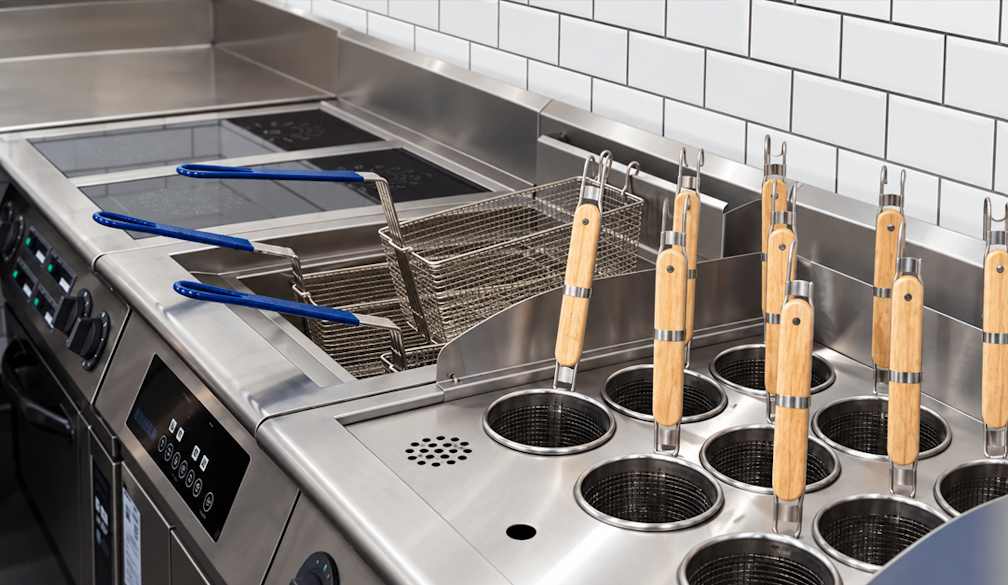
For restaurants, cafes, hotels and other foodservice businesses, commercial kitchen equipment is one of the largest operational investments made before the first meal is served.
It can also be one of the easiest areas to assess primarily on upfront price.
That approach may make sense when controlling fit-out costs, but the purchase price of an appliance tells only part of the story. Commercial cooking equipment works for long hours, often under intense conditions, and its performance can influence labour efficiency, energy consumption, maintenance, service continuity and even what a kitchen is capable of producing.
For operators looking beyond opening day, equipment is better viewed as productive infrastructure: an asset that should support the business reliably over many years.
Look Beyond the Initial Purchase Price
Two pieces of equipment can perform the same basic task while producing very different costs over their working lives.
A lower purchase price can be attractive during a fit-out, particularly when dozens of competing expenses need to be managed. However, the true cost of ownership also includes energy use, maintenance, repairs, cleaning time, replacement parts and the financial impact of downtime.
This does not mean that the most expensive option is automatically the best. It means equipment should be assessed against the value it is expected to deliver.
A cooktop that suits the menu, withstands heavy service and can be maintained efficiently may represent better long-term value than a cheaper alternative that needs early replacement or regularly interrupts operations.
Downtime Has a Business Cost
When a key appliance fails during service, the cost is rarely limited to the technician's invoice.
A failed fryer can remove popular dishes from the menu. An unreliable cooktop can reduce kitchen capacity. Oven problems can affect preparation schedules and service times. In a high-volume venue, even a relatively short interruption can have a flow-on effect across staff, customers and revenue.
For that reason, reliability and serviceability should form part of the purchasing decision.
Operators should consider whether equipment is designed for commercial workloads, how easily common components can be accessed, whether technical documentation is available, and how readily spare parts and service support can be obtained.
Planning for maintenance before equipment is purchased is considerably easier than discovering these limitations after a breakdown.
Efficiency Extends Beyond Energy
Energy consumption is an important operating cost, but kitchen efficiency is broader than electricity or gas usage alone.
Equipment can also affect the amount of time staff spend waiting for cooking surfaces to recover, cleaning at the end of service, moving between stations or compensating for inconsistent performance.
A well-designed cooking line can reduce unnecessary movement and allow several cooking processes to happen efficiently within a relatively compact footprint. Combination units, modular equipment and carefully planned workstations can all contribute to better use of space.
In this sense, equipment selection becomes part of workforce productivity. Small efficiencies repeated across hundreds of meals and thousands of services can become meaningful over the life of a restaurant.
Energy and Heat Deserve Greater Attention
Commercial kitchens are energy-intensive environments, and the way equipment produces and transfers heat can affect more than the utility bill.
Heat released into the kitchen also influences ventilation and cooling requirements, as well as the working environment for staff.
This is one reason induction technology is receiving increasing attention in professional kitchens. Rather than producing an open flame, induction transfers energy directly into compatible cookware, reducing heat lost into the surrounding space.
Gas remains an important and appropriate cooking technology for many applications, particularly where chefs require particular cooking characteristics. The broader point is that operators now have more options and should consider the energy source alongside the menu, infrastructure, kitchen environment and long-term operating strategy.
Match the Equipment to the Business Model
There is no single ideal commercial kitchen specification.
A high-volume Asian restaurant, steakhouse, hotel kitchen, cafe and institutional foodservice operation may all require very different combinations of equipment.
The most effective investment is therefore equipment selected around the business itself.
Operators should consider peak service volume, menu style, cooking methods, available space, staffing, utility capacity and future plans. Buying excessive capacity can unnecessarily increase capital and space requirements, while under-specifying equipment can constrain the kitchen during its busiest periods.
Australian commercial kitchen equipment specialist Luus Industries offers gas, induction and specialist Asian cooking solutions across a broad range of professional applications, illustrating how equipment can be configured around different menus and operating environments rather than taking a one-size-fits-all approach.
Think About the Equipment Lifecycle
Commercial kitchen equipment should ideally be considered across its entire lifecycle.
Before purchasing, useful questions include:
How intensively will the equipment be used?
How straightforward is routine cleaning?
Can commonly serviced components be accessed efficiently?
Are spare parts available?
Is local technical support available?
Could the equipment still suit the kitchen if the menu or service volume changes?
These questions may not appear on a simple price comparison, but they can significantly influence the long-term value of the investment.
Equipment that is maintainable and supported can often remain productive for longer, while equipment that is difficult to repair may effectively become disposable once a major problem occurs.
Kitchen Design Can Protect the Investment
Even well-selected equipment can perform poorly if the surrounding kitchen has not been planned properly.
Ventilation, clearances, utility connections, workflow and access for servicing all need to be considered during the design stage.
It is also worth involving chefs and kitchen staff early. They understand the sequence of tasks during service and can often identify workflow issues that are not obvious from a floor plan.
Equipment suppliers, kitchen consultants and designers can then translate those operational requirements into an appropriate cooking line.
The objective should not simply be to fit as much equipment as possible into the available area. It should be to create a kitchen in which each asset contributes effectively to the operation.
A Strategic Asset, Not Just a Fit-Out Expense
Commercial cooking equipment is ultimately there to produce revenue.
It enables a restaurant to execute its menu, maintain service speed, support its staff and deliver a consistent experience to customers. Viewed in that context, the purchasing decision becomes more strategic.
Upfront cost will always matter, particularly for new businesses. But purchase price should be weighed alongside reliability, energy and heat efficiency, serviceability, productivity and the expected life of the equipment.
For operators planning a new kitchen or replacing ageing appliances, taking a longer-term view can help avoid false economies and direct capital towards equipment that genuinely supports the business.
The best commercial kitchen investment is not necessarily the cheapest or the most expensive. It is the equipment that performs the required job consistently, efficiently and reliably throughout the life of the operation.


 Business Daily Media