Cutting Emissions and Costs: Telematics for Australian ESG Goals
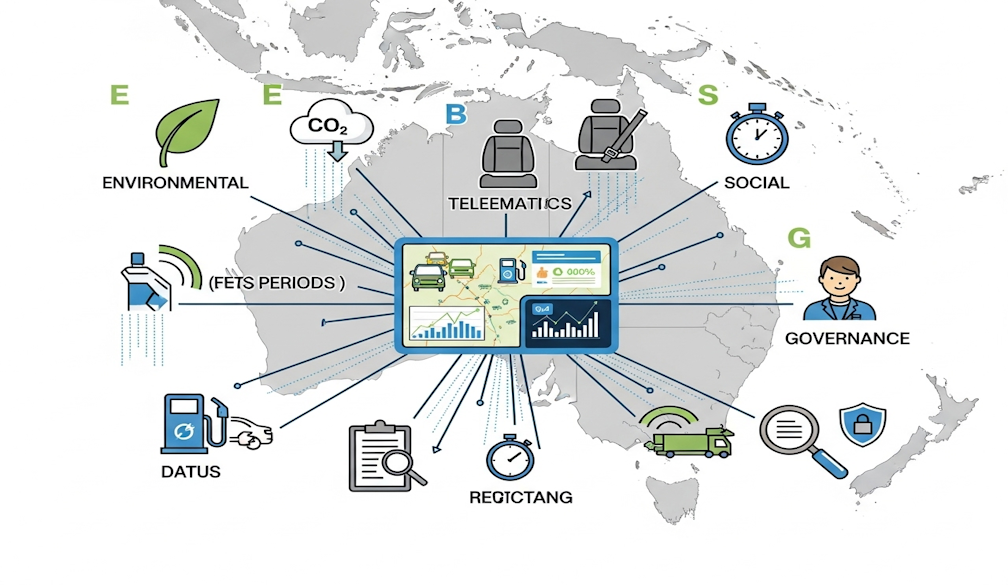
For Australian businesses, particularly those operating commercial fleets across vast distances, Environmental, Social, and Governance (ESG) objectives are rapidly moving from boardroom aspiration to urgent, measurable necessity. Transport is a significant source of the nation's emissions, placing fleets under immense pressure to decarbonise. The good news is that meeting these environmental targets—like complying with the new New Vehicle Efficiency Standard (NVES)—is intrinsically linked to cutting operational costs. Telematics provides the crucial data and control mechanisms to achieve both.
E for Environmental: Turning Data into Decarbonisation
Telematics is the single most effective tool for fleet operators seeking to reduce their carbon footprint. It tackles the challenge directly at the source: vehicle behaviour and efficiency.
- Fuel Consumption and CO₂ Reporting: Telematics systems, often referred to as 'black boxes' in the UK, precisely measure fuel use and link it to vehicle activity. This enables accurate, auditable calculation of CO₂ emissions, which is vital for ESG reporting frameworks and the new NVES. Businesses gain the transparency needed to track progress against net-zero commitments.
- Route Optimisation: By leveraging GPS and real-time traffic data, telematics continually suggests the most efficient routes. Eliminating unnecessary mileage, avoiding congestion, and improving journey planning directly reduces fuel burn and, consequently, tailpipe emissions. The wider radius of the Australian road network makes route efficiency technology an especially critical component of emissions reduction.
- Abolishing Idling: Excessive engine idling is a major source of wasted fuel and emissions. Telematics tracks and alerts managers to extended idling periods, allowing policies and driver coaching to be implemented that stamp out this inefficient practice.
- Preventative Maintenance for Efficiency: Poorly maintained engines are fuel guzzlers. Telematics monitors onboard diagnostics and proactively schedules preventative maintenance. Ensuring engines run at peak efficiency reduces fuel consumption and lowers harmful emissions.
The Financial Mandate: Compliance and Cost Savings
Environmental responsibility no longer sacrifices profit; it drives it. The same telematics data that helps the planet also helps the bottom line.
|
Telematics Action |
ESG Benefit (Environmental) |
Cost Benefit (Financial) |
|
Eco-Driving Coaching |
Reduces CO₂ and particulate emissions. |
Cuts fuel bills by up to 20%; reduces wear and tear on tyres and brakes. |
|
Reducing Idling Time |
Cuts unnecessary emissions. |
Saves fuel costs that are literally going up in smoke. |
|
Proactive Maintenance |
Ensures engine runs cleanly and efficiently. |
Avoids costly emergency repairs and vehicle downtime. |
|
Asset Utilisation |
Reduces the overall fleet size needed. |
Avoids capital expenditure on new vehicles; lowers insurance and registration costs. |
Export to Sheets
S & G for Social and Governance: Safety and Transparency
ESG is more than just the environment. Telematics also underpins the 'Social' and 'Governance' aspects of responsible Australian business operation:
- Social: Driver Safety and Wellbeing: Telematics monitors driver behaviour (speeding, harsh braking) and fatigue, supporting the mandated Chain of Responsibility (CoR) laws. By promoting safer driving and ensuring compliance with rest periods, the business demonstrates a robust duty of care to its staff, a key social pillar.
- Governance: Auditable Reporting: Telematics provides objective, tamper-proof data. For governance, this ensures all reported claims regarding fuel usage, compliance, and safety are auditable and transparent. This verifiable data is essential for attracting ethical investment and avoiding accusations of 'greenwashing'.
Future-Proofing for the EV Transition
As Australia pushes towards its net-zero 2050 target, the transition to Electric Vehicles (EVs) is accelerating. Telematics is the necessary bridge for this change.
Telematics allows fleet managers to conduct an EV Suitability Assessment on their current fleet, analysing range, route requirements, and charging patterns to identify which vehicles can be replaced with electric counterparts today. Once the transition begins, telematics is then used to manage the EV fleet, monitoring battery health, charging schedules, and energy consumption to ensure maximum efficiency and uptime.
In conclusion, for Australian businesses facing rising fuel costs and new regulations like the NVES, telematics is the smart investment. It transforms data into actionable strategy, ensuring that fleet operations become simultaneously cheaper, cleaner, and better governed. It's the practical, data-driven path to achieving ambitious ESG targets.


 Business Daily Media